As we look at the Holy Gospels and the life of the Lord Jesus, we see him associating himself with a plentiful number of identities, a great number of statements starting with “I am…”. Obviously the most profound of the “I am” statements is Jesus associating himself with the God of Israel who revealed himself to Moses, as we see in the book of Exodus:
“Then Moses said to God, “If I come to the sons of Israel and say to them, ‘The God of your fathers has sent me to you’, and they ask me ‘What is his name?’ what shall I say to them?” God said to Moses, “I AM WHO I AM.” (Exodus 3: 13-14)
This saying “I AM WHO I AM” or in the Hebrew “YHWH” was seen by Israelites to be so sacred that no man dared utter these words. But eventually, there was one man who dared to speak these sacred words. In his discourse with the Pharisees about who their father is, Jesus boldly speaks:
“Jesus said to them, “before Abraham was, I AM” (John 8:58)
We see here that the person of Jesus is clearly associating himself with the God of the Old Testament, and is also showing the Pharisees that their father Abraham longed to see his day and the coming of his kingdom.
As mentioned above, Jesus speaks a multitude of more statements beginning with “I am”.
“I am the Good Shepherd” (John 10:14)
“I am the Bread of Life” (John 6:48)
“I am the True Vine” (John 15:1)
“I am the way, the truth, and the life” (John 14:6)
Although we could and should dissect all of these profound proclamations from Jesus, we will focus on one of them today, Jesus saying that he is “the way, the truth, and the life”. And, even going deeper, solely focusing on Jesus as “the truth”.
“Pilate said to him, “So you are a king?” Jesus answered. “You say that I am a king. For this I was born, and for this I have come into the world, to bear witness to the truth. Every one who is of the truth hears my voice.” Pilate said to him, “What is Truth?” (John 18:37-38)
Pilate’s cryptic response to Jesus, “What is truth? or “Quid est veritas?” in Latin shows that in the past, as in today, man is a skeptic towards the truth.
No doubt, there is a war against truth in the current state of society that we find ourselves in. No longer is there a ruling view of the world based on Biblical truth as found in the days of Christendom, but rather a world where subjectivity, autonomy, & relativism are false idols that modern man dances around the altars of like the priests of Baal.
Though in our own times we fight a battle against objective truth, former times are not exempt from such battles as well. Some of the most consequential battles that the church has had to fight in her history is the constant arising of different heresies throughout the ages. From the Arian Heresy in the early days of church, all the way to the 17th century with the Jansenist movement, the truth of Christ and his church is always at odds with the times that we find ourselves in.
This then begs the question: Why does the Church so strenuously fight these battles for truth?
This question can come from a very modern and Kantian view of religion; namely that religion is first and foremost about ethics. No longer does religion involve an emphasis on truth at its core, but as long as it leads you into becoming a decent ethical person towards your neighbor, that is the essence of religion. This view on truth has erupted from modernity and has left its mark on western civilization, to be sure.
Even in the Church, we can fall victim to this way of viewing our faith; namely, that God has set up the Church to lead his followers to solely become good moral people, and that many things in our rich history and tradition are just pious fluff that man once valued but are now unnecessary. We can view things such as the Sacraments, devotions, & personal prayer as mere tasks to be completed that are meant to lead us to the end of attaining this moral or ethical state, while disregarding the supernatural and putting the idea of God on the back-burner. We can fall prey to believe these things as mere superstitions that distract us from this “real purpose” of religion. No doubt, these things should lead us into a conversion of heart and lead us to deeper love of neighbor, but if our faith is not leading us to deeper conversion and conformity into the person of Jesus and drawing us into the heart of the church, then it is in vain.
So what is the proper view of the church that we must have?
His Excellency, Bishop Robert Barron makes the argument that the master theme of the whole Bible is Orthodoxy; namely “right praise” or “right worship”, and this is also accompanied by right belief.¹ I think there is a compelling case for this view of the Bible and ultimately the Church, for this right praise and worship is what we will be doing in all of eternity. When man falls into patterns of addiction, corruption, & disorder, it almost always stems from the worship or praise of something other than God.
If you examine the whole Old Testament, it is a constant theme of men falling away from orthodoxy and fidelity to God, and God working to invite them back into right praise, because he knows that the well ordered soul has right praise of the one, true, omnipotent God at its core. Take the Exodus for example: what was the purpose of the 10 plagues that God placed on Egypt? If you examine the texts, it is not merely for the sake of punishment. When God turns the Nile to blood, he says to Moses:
“And you shall say to him, ‘The Lord. the God of the Hebrews, sent me to you, saying, “Let my people go, that they may serve me in the wilderness; and behold, you have not obeyed.” Thus says the Lord, “By this you shall know that I am the Lord: behold, I will strike the water that is in the Nile with the rod that is in my hand, and it shall be turned to blood.” (Exodus 7:16-17)
Here God is reminding his people of who he is! And he knows that when his people rightly view his identity, then will their lives fall into proper order.
Earlier in Exodus, We also see that God’s first request he gives to Moses & Aaron is to spend 3 days in the wilderness to sacrifice to the Lord. This is a clear sign that God desires our right praise, worship, & belief before all else. He didn’t merely want to drive the Israelites out of Egypt, he wanted to drive Egypt out of the Israelites, to drive away false gods from within them so that they can come and worship the one, true God.
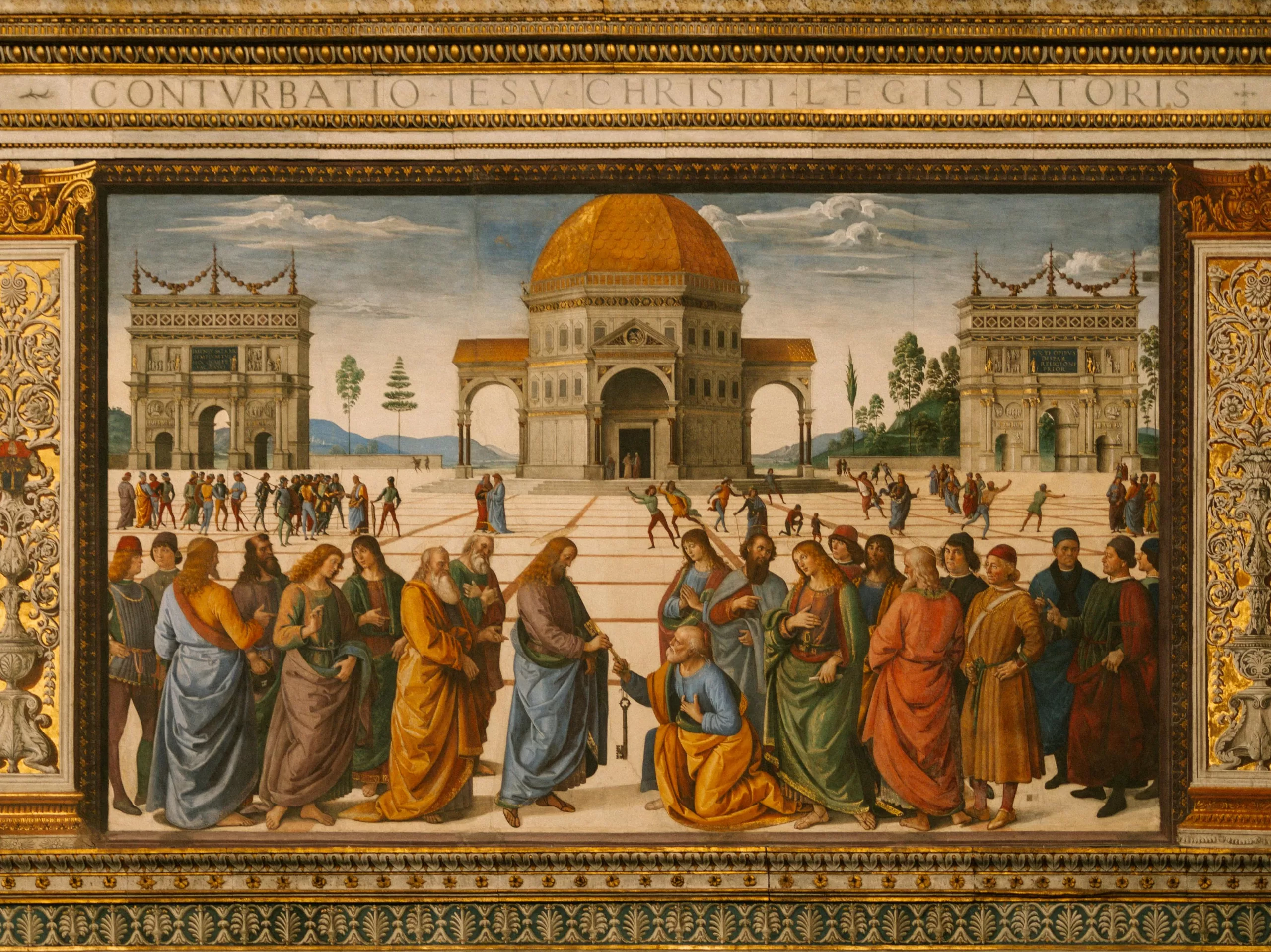
Ultimately then, the Church is not merely some earthly institution or charitable organization that helps its members find some sense of fulfillment in this world, but it is the unique vehicle that Jesus has given us people for our salvation! Jesus did not become incarnate to solve all of the misfortunes here on earth, he came to save us! This is the truth of Christ and His church. One of my favorite names for the church is “the barque of Peter”. The church is a ship that we must ride through the stormy seas of this world as pilgrims until we get to our heavenly homeland. It is the safe haven of all truth that is built on the firm foundation of the rock that is Peter.
The church is the fullness and finality of the truth that God has been longing for his people to know since the fall of our first parents in the Garden of Eden. The church as the “Mystical body of Christ” shows us that if we run to the Catholic Church and desire to find a home within her, Jesus is present and active there, as he and his bride can never be separated.
At this feast day of St. Thomas the Apostle, we remember his words towards the Lord: “Lord, we do not know where you are going; how can we know the way?” and Jesus replying with the words that we have already mentioned: “I am the way, the truth, and the life; no one comes to the father but by me” (John 14:5-6).
So what does Jesus want of us? Is it ultimately just to be a “good moral person”? Is it to find perfect fulfillment on this side of heaven, void of relationship with him?
No.
Jesus makes it perfectly clear that his ultimate mission was to rescue man from the bonds of sin and death and to bring him back into communion with the Father. He came to establish a church which is the possessor of all truth in the whole cosmos, and this same Holy Mother Church is the means where we sinners come to be in relationship with Him and where we find our salvation.
Let us hold steadfast to the faith on this earthly pilgrimage, so that one day we might attain the beatific vision in heaven and eternally proclaim with St. Thomas: “My Lord and my God!” (John 20:28).
St. Thomas the Apostle,
Pray for us!
¹Pageau, Jonathan, host. “A Return to Cosmic Christianity – with Bishop Barron”. The Symbolic World, 24 Nov. 2021. https://open.spotify.com/episode/47YUbJq7NOCoZmeBAdEmag?si=AXeslmUES6-kYjY5tm0ydw